
Do Calories Really Matter for Weight Loss?
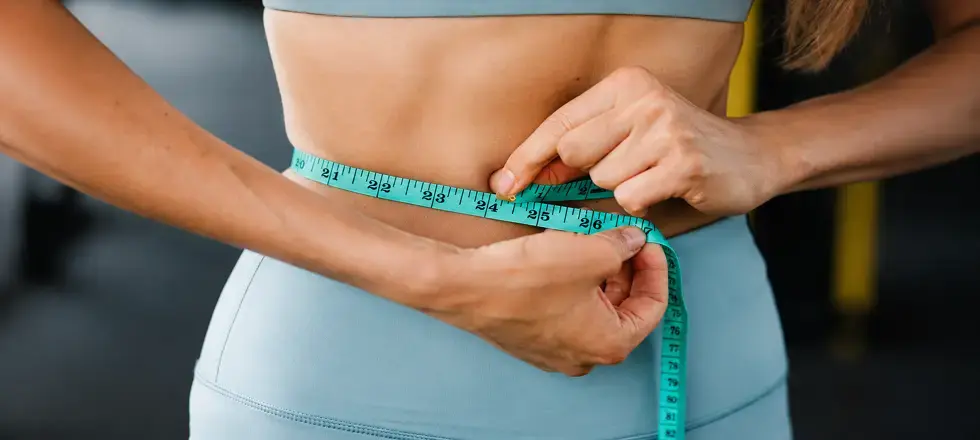
I get asked this question almost every single day. Clients walk into my clinic, sit down, and before we even talk about their goals, they ask me, "Ryan, do calories really matter, or is that whole thing a myth now?"
So let me clear the air for you today, the same way I do with the athletes, actors, and busy professionals I work with. The short answer is yes, calories matter. But the longer, more honest answer is a lot more interesting than that. Let me walk you through it.
First, Let Us Understand What a Calorie Actually Is
A calorie is simply a unit of energy. That is it. When you eat food, you give your body fuel. When your body uses that fuel to breathe, walk, think, digest, and workout, it burns that energy.
Weight loss, at its core, comes down to one basic principle. If you consume less energy than you burn, your body dips into its stored fat for fuel. We call this a calorie deficit. If you eat more than you burn, your body stores the extra as fat. That is a calorie surplus.
This law does not care about your Instagram feed or the latest diet trend. It has been true for decades and it will stay true. So when someone tells you calories do not matter at all, be a little careful. They are usually trying to sell you something.
But Here Is Where It Gets Real
Now, if calories were the whole story, weight loss would be simple. Eat 1500 calories of chocolate cake and you would lose the same weight as eating 1500 calories of dal, sabzi, and grilled chicken. Right?
Wrong. And this is exactly where most people get confused.
Yes, both meals have the same energy. But your body does not treat them the same way. This is something I have seen over and over in my two decades of practice. The quality of your calories decides how hungry you feel, how your hormones behave, how much muscle you keep, and whether you can actually stick to your diet for more than a week.
Let me break down why calories matter, but why they are not the only thing that matters.
The Hidden Truth About Protein
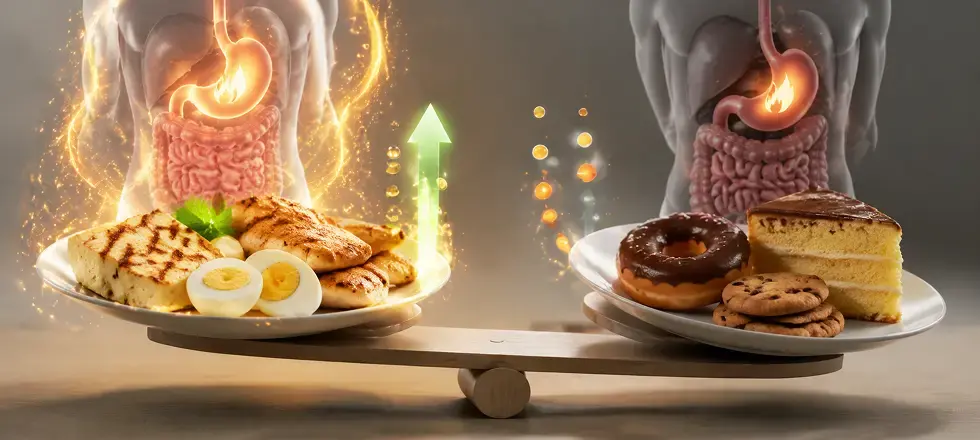
Here is a fact that changed the way many of my clients eat. Not all calories are burned the same way during digestion.
Your body actually spends energy just to digest food. This is called the thermic effect of food. Protein has the highest thermic effect. Your body burns roughly 20 to 30 percent of the calories from protein simply breaking it down. Carbs burn around 5 to 10 percent. Fats burn only about 3 percent.
So if you eat 100 calories of paneer or eggs, your body actually keeps fewer of those calories compared to 100 calories of a sugary biscuit. On top of that, protein keeps you full for hours, which means you naturally eat less through the day without feeling deprived.
This is why I always tell my clients to build their plate around protein first. It is not just about the number. It is about how that number behaves inside your body.
Fiber, Fullness, and Why Volume Matters
Think about this for a second. Two hundred calories of chips will disappear in two minutes and leave you hungry again. Two hundred calories of vegetables, dal, and a small bowl of rice will fill your stomach and keep you satisfied.
Same calories. Completely different experience.
Foods high in fiber and water take up more space in your stomach. They signal your brain that you are full. When you eat whole, unprocessed Indian foods, you naturally eat fewer calories without counting a single thing. This is the secret most crash diets miss.
Your Hormones Are Listening
Weight loss is not just math. It is also biology. Insulin, cortisol, thyroid, and hunger hormones like ghrelin and leptin all play a massive role.
When you eat a lot of refined sugar and processed junk, your blood sugar spikes and crashes, leaving you tired and craving more. When you sleep badly or stay stressed, your cortisol rises and your body holds on to belly fat more stubbornly.
I have had clients who were eating in a deficit but still not losing weight, simply because their sleep was terrible and their stress was through the roof. Once we fixed those, the fat started melting. So calories matter, but the environment inside your body matters just as much.
So Should You Count Calories?

This is the honest part. For some people, counting calories for a few weeks is genuinely helpful. It opens your eyes. Most people have no idea how much they actually eat until they track it. That handful of nuts, that extra spoon of ghee, that sweet after dinner, it all adds up.
But I do not want you counting calories for the rest of your life. That is stressful and honestly, it takes the joy out of food. Once you understand portions and start eating mostly whole foods, your body finds its rhythm.
My approach with clients is simple. Understand calories, respect them, but do not become a slave to a spreadsheet. Focus on the quality of your food, prioritize protein, load up on vegetables, manage your sleep and stress, and stay active. When you do this, the calorie side of things often takes care of itself.
The Mistake I See Most Often
The biggest mistake people make is starving themselves. They cut calories so aggressively that they lose muscle, wreck their metabolism, and end up exhausted and cranky. Then they binge, gain everything back, and blame themselves.
Please do not do this. A slow, steady, sustainable deficit will always beat a crash diet. You want to lose fat, not muscle. You want to feel strong, not weak. And you want results that stay, not results that vanish the moment you eat normally again.
My Final Take
So do calories really matter for weight loss? Yes, they do. You cannot escape the basic energy balance. But calories are only one piece of a much bigger puzzle.
The type of food, your protein intake, your fiber, your hormones, your sleep, your stress, and your consistency all decide whether you actually reach your goal. Two people can eat the same number of calories and get completely different results based on these factors.
My advice to you is this. Do not obsess over the number. Understand it, use it as a guide, and then focus on eating real, nourishing food that keeps you full and energetic. That is how you lose weight and keep it off for good.
Your body is not a calculator. It is a living, breathing system. Treat it with respect and it will reward you.
FAQ
Can I lose weight without counting calories?
Yes, absolutely. Many of my clients never count a single calorie. When you eat whole foods, prioritize protein, fill half your plate with vegetables, and control your portions, you naturally fall into a deficit. Counting can be a useful learning tool for a few weeks, but it is not a lifelong requirement.
Are all calories the same?
No. On paper, a calorie is a calorie in terms of energy. But your body reacts very differently to 100 calories of protein compared to 100 calories of sugar. Protein keeps you full, preserves muscle, and burns more during digestion. Quality matters just as much as quantity.
Why am I in a calorie deficit but not losing weight?
This is very common. Poor sleep, high stress, water retention, hormonal issues, or simply underestimating how much you eat can all be the reason. Sometimes you are eating more than you think. Sometimes your body needs better rest and lower stress to release stored fat. Look at the full picture, not just the number.
How many calories should I eat to lose weight?
There is no single answer because it depends on your age, weight, activity level, muscle mass, and health conditions. A very aggressive deficit backfires. A moderate, sustainable deficit works best. This is where personalized guidance truly helps, since a plan built for you will always beat a generic number from the internet.
Is protein really that important for weight loss?
Yes, it is one of the most important things. Protein keeps you full, protects your muscle while you lose fat, and burns more energy during digestion. If you get one thing right in your diet, make it your protein intake.
Should I avoid carbs and fats to lose weight?
No. Both carbs and fats are essential for energy, hormones, and overall health. You do not need to fear them. You simply need to choose better sources and control your portions. Balance always wins over extreme restriction.
If you want a plan built around your body, your lifestyle, and your goals, that is exactly what my team and I do every day. Weight loss does not have to be confusing or miserable. It just has to be personal.


Trang chủ E39 Mình tình cờ ghé qua website này và dành vài phút để xem cách nội dung được trình bày. Ấn tượng đầu tiên là giao diện khá gọn gàng, các phần chính được sắp xếp rõ ràng nên không mất nhiều thời gian để làm quen. Phần điều hướng cũng tương đối dễ sử dụng, giúp việc tìm và chuyển sang những nội dung khác diễn ra thuận tiện. Khi xem trên điện thoại, bố cục vẫn khá ổn, chữ dễ đọc và các thao tác cơ bản như cuộn trang hay chọn mục đều đơn giản.
Trang chủ V79 khi đang tìm tài liệu liên quan đến một nội dung mình quan tâm nên đã mở vào đọc thử. Mình chỉ lướt qua để tham khảo cách họ trình bày và phân chia các chuyên mục. Cảm nhận đầu tiên là bố cục khá sạch, từng nhóm nội dung được tách ra rõ ràng nên không tạo cảm giác quá tải. Tổng thể, website có cách trình bày gọn và khá dễ theo dõi. Các tiêu đề có kích thước phù hợp, giúp người xem dễ theo dõi vị trí khi kéo xuống.